Muji-style HDB design
Pale timber, white walls, visible modular storage and nothing on the counters. It is the most searched-for look in Singapore flats, and the most often reduced to buying the furniture and hoping.
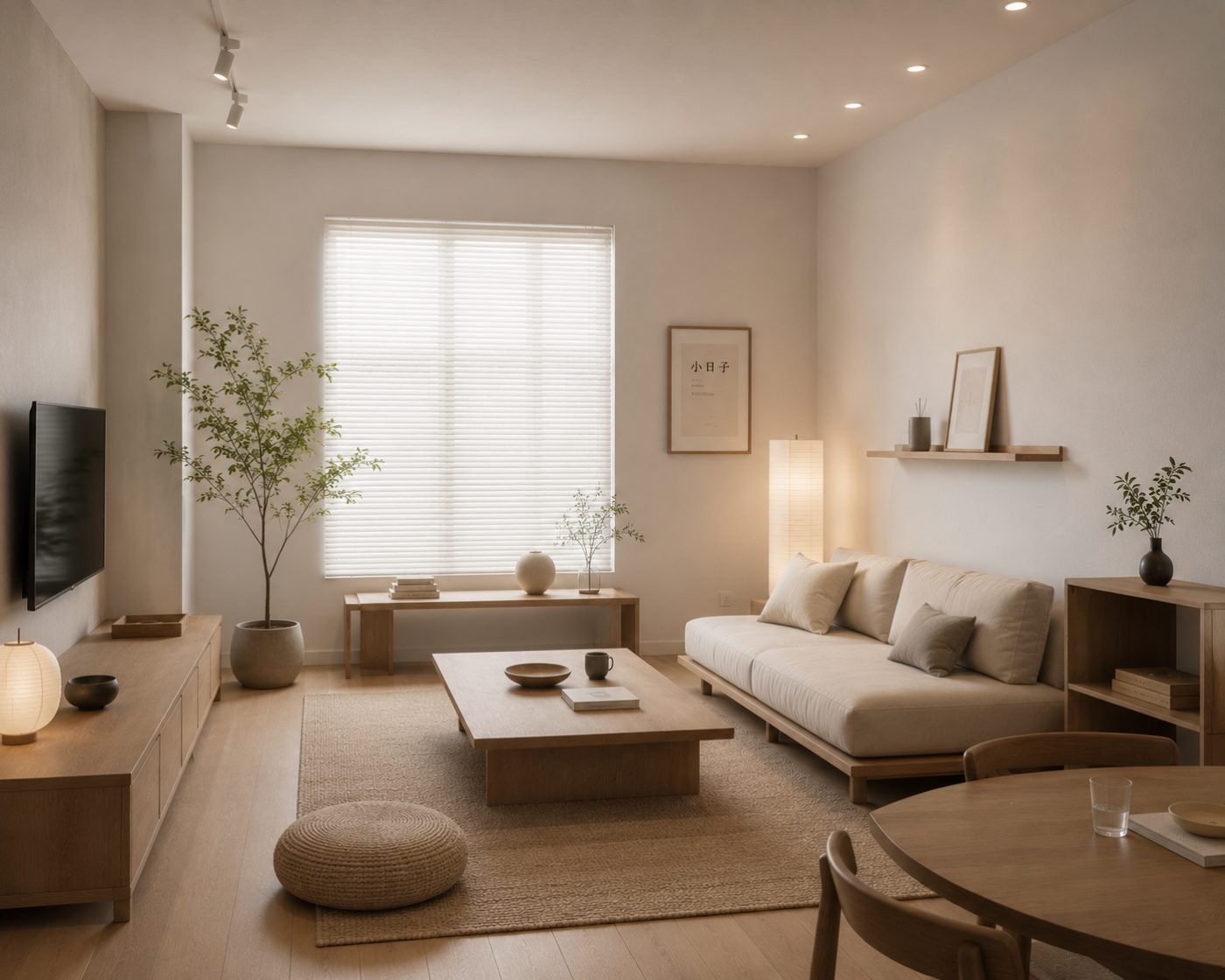
What it actually is
Muji-style is a practical look before it is an aesthetic one. Everything is light, everything is modular, and storage is honest rather than hidden — open shelving, drawer units, boxes that match. The calm comes from repetition: the same timber tone, the same box, the same handle, everywhere.
That is also why it fails so often. Buy the furniture without planning the walls and you get a flat full of good objects with nowhere to sit properly. The look is a system, and the system has to be drawn before anything is bought.
Palette and materials
- Timber: pale birch or beech tones, fine and even grain, matte finish. Consistency matters more than species.
- Walls: white or a warm off-white, flat finish. This is the one style where plain paint is correct.
- Storage: modular and repeated — same box, same shelf pitch, same drawer height.
- Textiles: unbleached cotton and linen; no pattern.
- Metal: almost none. Where it is unavoidable, matte and pale.
Where it works
Made for 3-, 4- and 5-room flats, and the easiest of these styles to phase — you can renovate the shell now and build up the storage over a year without the flat looking half-finished.
It suits people who are honest about owning things. Unlike a fully concealed minimalism, Muji-style gives possessions a visible place, which is a much easier standard to keep up.
Where the budget goes
Less than most. The finishes are inexpensive, and much of the storage is furniture rather than carpentry, which moves cost out of the renovation contract and into a shopping budget you control over time.
Where it is worth spending: the kitchen and the entry. Both take the heaviest daily use, and both are where flat-pack storage looks tired first. Costs for a full flat are in the HDB renovation cost guide.
What to watch for
- Showroom syndrome: matched furniture from one range makes a home look like a display. Mix in one or two older or personal pieces.
- Open shelving is a commitment: everything on it is on display permanently. Decide honestly whether you will keep it tidy.
- White walls and Singapore light: pure white can glare in a west-facing flat. A warm off-white handles afternoon sun better.
- Pale timber wears: the doorway edges and the kitchen front will show it first. Specify a tougher finish there.
Common questions
- Is Muji style the same as minimalist?
- No. Minimalism removes things from view; Muji-style gives them a visible, orderly place. In practice the Muji approach is far easier to live with in a family flat.
- Can I do a Muji-style HDB on a modest budget?
- It is the most budget-tolerant look on this site, because so much of it is furniture rather than built-in carpentry. Spend on the kitchen and entry joinery, buy the rest over time.
- How is it different from Japandi?
- Japandi is darker, more textural and more composed — lime-wash walls, mid-tone timber, concealed storage. Muji-style is lighter, plainer and more practical.
Not sure if this is you?
Send us a few images you like. We’ll tell you what they have in common — and what it takes to build.