Japandi interior design in Singapore
Warm minimalism: Japanese proportion and Scandinavian lightness in the same room. Low profiles, natural woods, textured walls and almost no visual clutter — which only works when the storage behind it is planned properly.
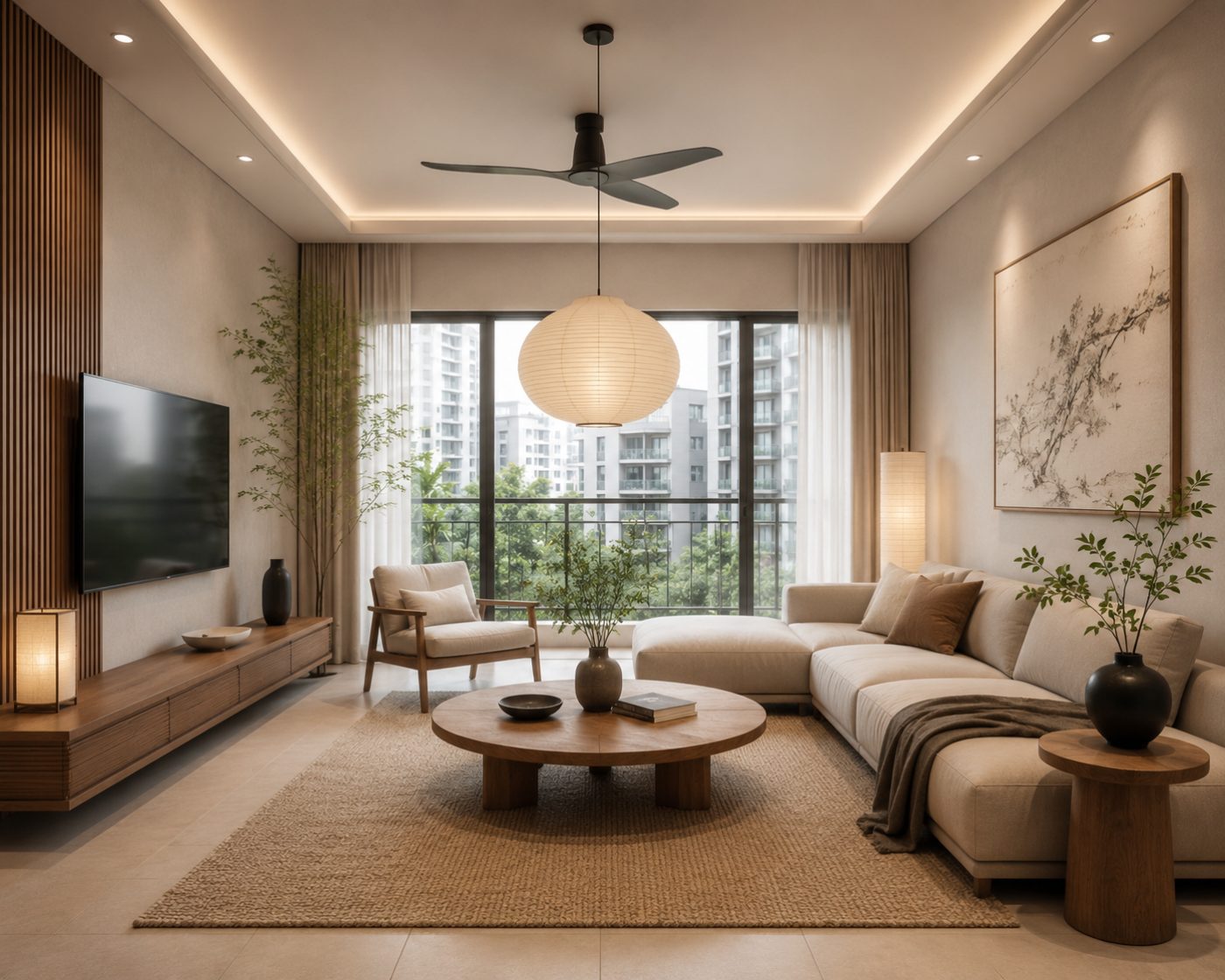
What it actually is
Japandi is a hybrid, and knowing which half you are leaning on matters. The Japanese side brings proportion, low furniture, screens, and a preference for one good material over several. The Scandinavian side brings pale timber, soft textiles and practicality. Pushed too far towards Japan it becomes austere; too far towards Scandinavia and it is simply Scandinavian with a darker stain.
The distinguishing move is contrast held at low volume: warm mid-tone timber against a chalky wall, one dark element for weight, and texture doing the work that colour would do in another style.
Palette and materials
- Timber: warm mid-tones — oak with a natural or slightly smoked finish, walnut used as an accent rather than throughout.
- Walls: lime-wash, micro-cement or a textured paint. Flat paint is the one thing that makes Japandi look cheap.
- Natural fibre: paper, rattan, linen. Usually in a screen, a pendant or a door insert.
- Hardware: blackened or bronzed, and as little of it as possible — handleless where the budget allows.
- Stone: matte, never polished. Honed surfaces read correctly; gloss does not.
Where it works
It suits owners who genuinely want order, in anything from a 4-room flat to a condo. It is also the most forgiving style for an awkward layout, because the low horizontal lines and continuous joinery quietly straighten a room out.
It is a poor fit for households that accumulate — a family with young children, or anyone who works from home surrounded by equipment — unless the storage plan is unusually generous.
Where the budget goes
Wall treatment and carpentry, in that order. Lime-wash or micro-cement is a specialist trade and costs several times what paint costs, and it is the single element that makes the style read as intended. After that, everything is joinery: full-height storage, recessed handles, timber slat detailing.
Slat features are where budgets quietly run away. They are labour-heavy, and a large run costs far more than the material suggests.
What to watch for
- Storage first, style second: this is the most storage-dependent direction on the site. Plan where every appliance, shoe and document lives before the joinery is drawn.
- Slat maintenance: timber slats collect dust in a way flat surfaces do not. Beautiful, and a weekly job.
- Sun bleaching: warm timber fades unevenly under direct afternoon sun. Factor in where the light lands before choosing the stain.
- Too little contrast: with everything at the same mid-tone the room goes flat. One dark anchor per space is usually enough.
Common questions
- What is the difference between Japandi and Muji style?
- They overlap heavily. Japandi is the broader design language — Japanese proportion crossed with Scandinavian material sensibility, and it can be quite dark and textural. Muji style is narrower and lighter: pale birch-toned timber, white walls, visible modular storage, and a look that leans practical rather than composed.
- Does Japandi work in a small HDB flat?
- Yes, and often better than in a large one. Low furniture and continuous joinery make a compact plan feel deliberate. The constraint is storage volume, not floor area.
- Is lime-wash or micro-cement practical in Singapore?
- Both are used here regularly. Specify a sealed system in wet or high-traffic areas, and accept that both are patch-repaired rather than touched up — the repair is visible if it is done casually.
Not sure if this is you?
Send us a few images you like. We’ll tell you what they have in common — and what it takes to build.